
Why Calories and Strength Training Matter
One of the most common nutrition challenges our members come to us with—especially those looking to lose weight or body fat—is confusion around what to eat and how much to eat.
There are a lot of ways to approach this, as we’ve seen from the overwhelming amount of literature and research on the topic.
Ultimately, it boils down to this: the best diet is the one you’ll actually do.
Any approach that works consistently creates a negative energy balance. That means you consume fewer calories than your body needs to function, day in and day out, long enough to see results—specifically weight or body-fat loss.
This does come back to the overarching idea of calories in versus calories out. While that can be an oversimplification of what’s happening in the body, being in a calorie deficit is what produces weight loss.
Things like hormones, medications, and other factors can absolutely make this easier or harder. Some of these variables can lower the number of calories we burn each day—but it still comes back to energy expenditure, just at a different baseline.
There is a doctor and health & fitness professional we follow who started in the fitness industry, became a physician, and now helps people with weight loss: Dr. Spencer Nadolsky.
We’re sharing his post today to add a little more credibility to these ideas. We know you might become a bit immune to hearing this from us, so we wanted to highlight that these are data- and science-backed approaches used by many others in the health and fitness space.
Recently, Dr. Nadolsky shared a post online—playfully (and with some tough love) pointing out this overarching concept—which you can find here:
https://vimeo.com/1157582642/8063d5289e?fl=pl&fe=sh
The post discusses how achieving weight or body-fat loss requires a calorie deficit, but some of the comments on the post are just as informative and helpful.
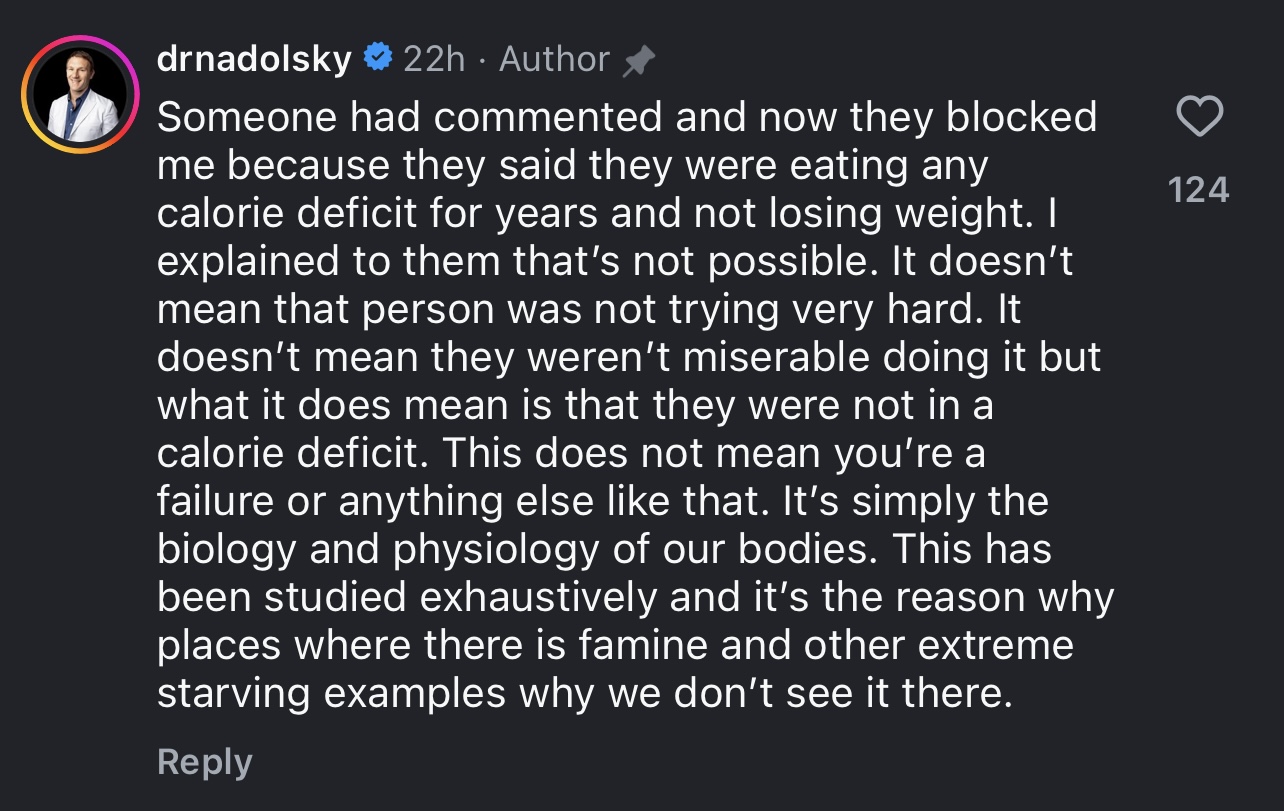
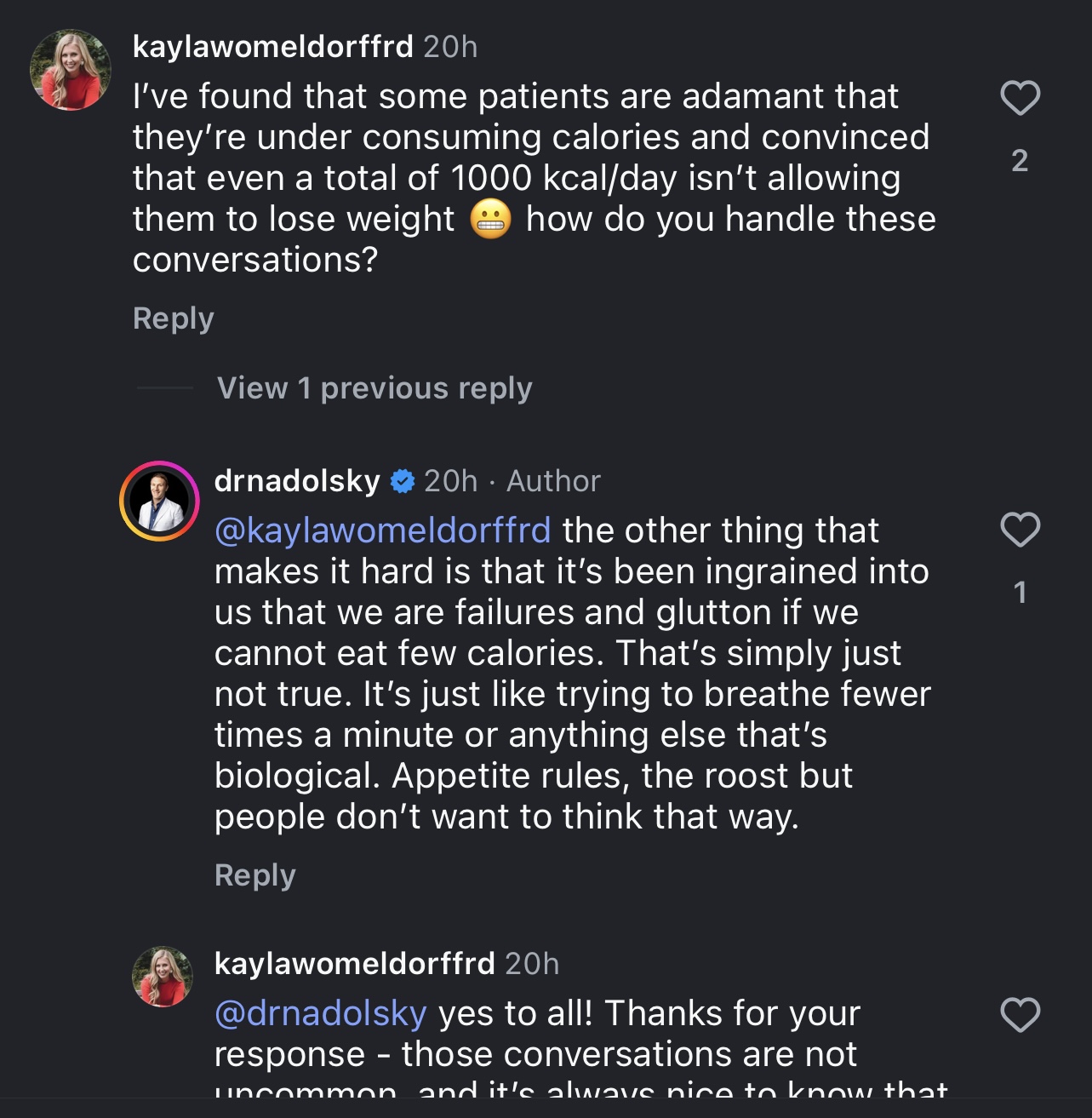
The first couple of comments touch on perhaps the most important points:
- We must be in a calorie deficit to achieve weight loss.
- It can be very hard to do.
- You are not a failure if you struggle to stay in a calorie deficit.
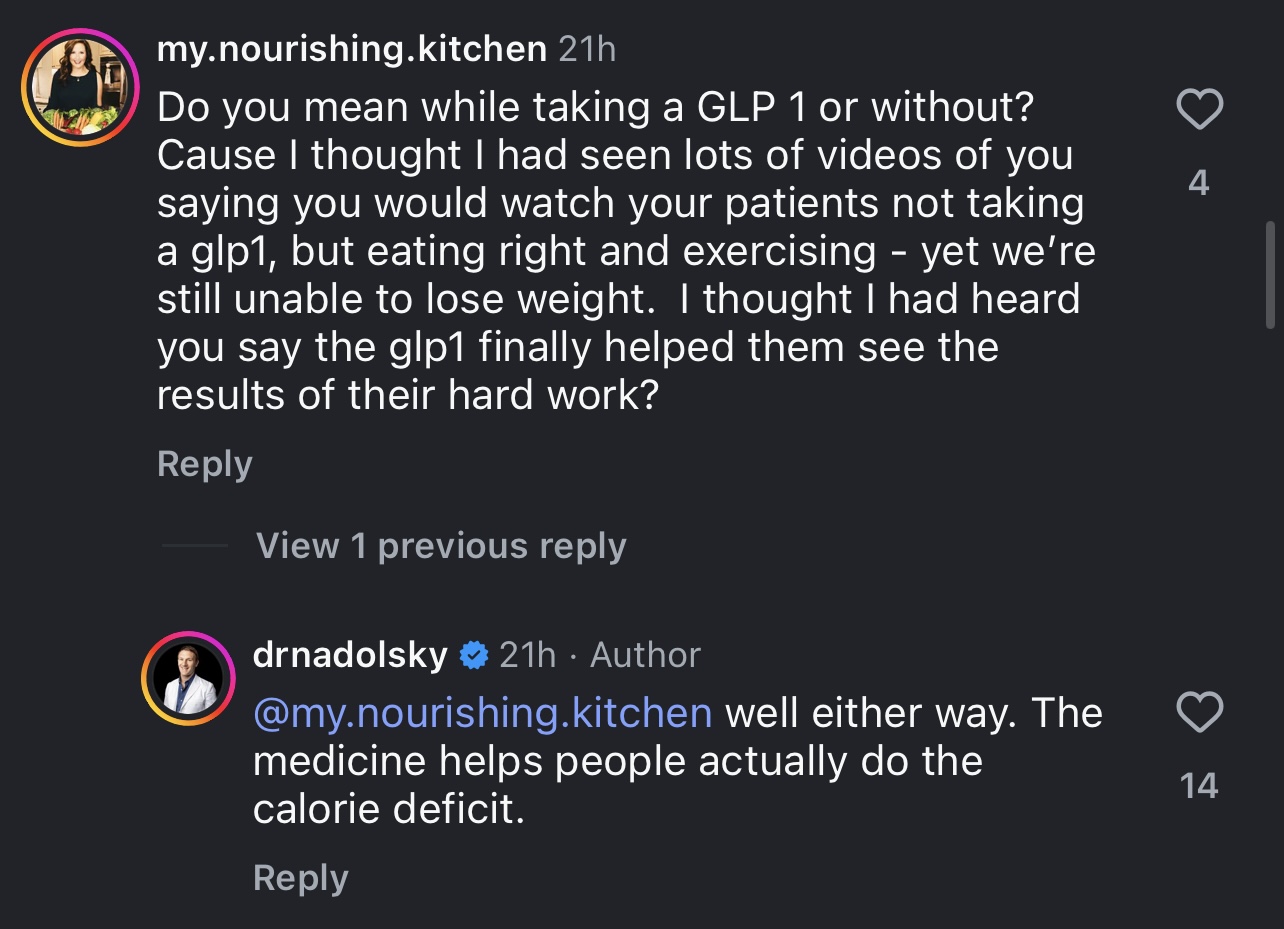
This next set of comments highlights why GLP-1 medications can be helpful. At the end of the day, it still comes back to achieving a calorie deficit. GLP-1s can make that easier because, in most cases, people naturally consume fewer calories. (Side note—and something we’ll expand on in future posts: when in any calorie deficit, especially larger ones like those seen with GLP-1s, strength training and pursuing strength become even more important.)
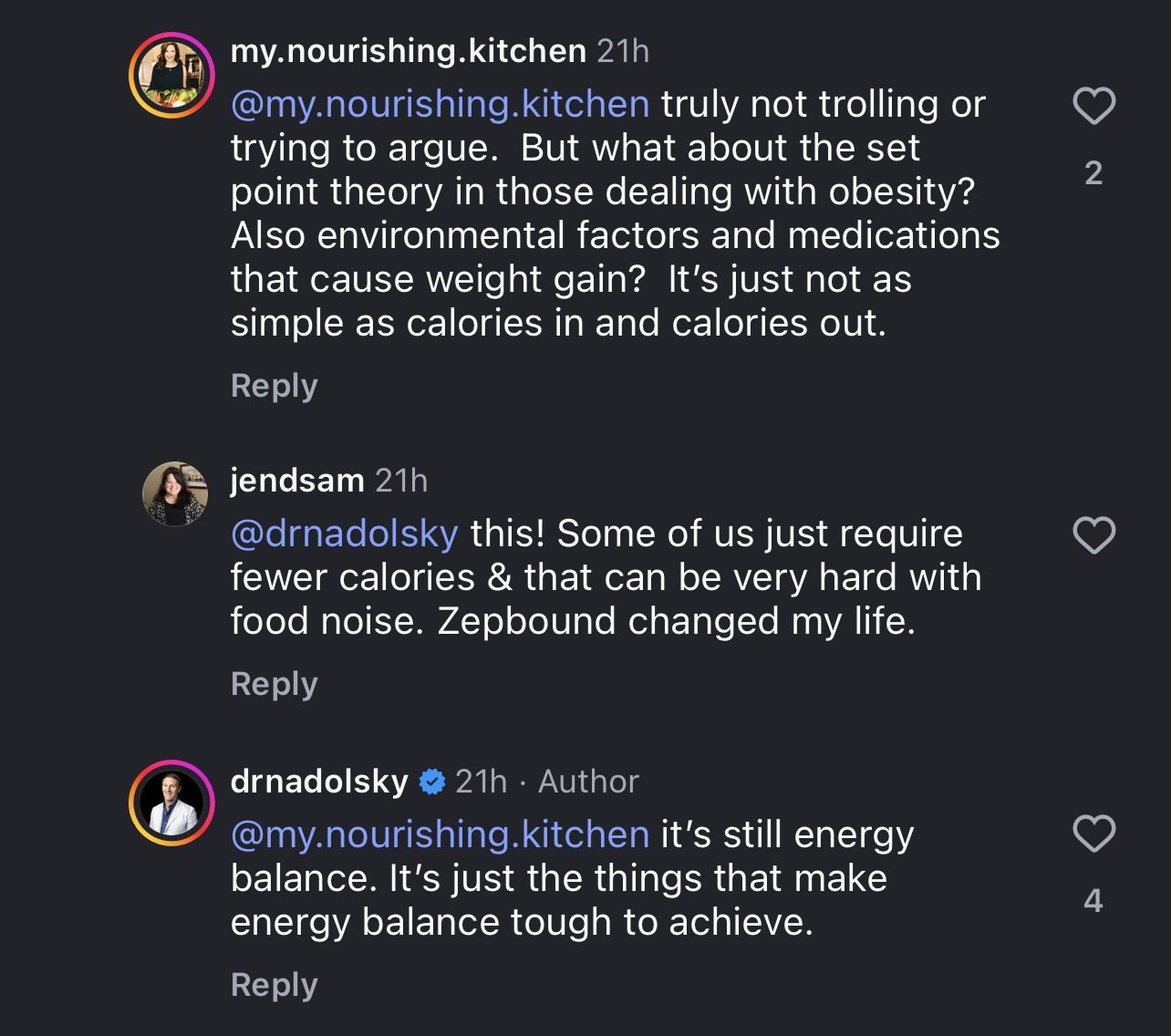
Finally, the last set of comments points out that environmental factors, medications, and hormones can all impact how many calories we burn. But it’s still energy balance. These variables can make that balance harder to achieve—but they don’t change the underlying principle.
Putting it all together:
Something we often talk about is that what gets measured gets managed. Simply put, if we want to better understand what’s happening—and create real change—we need some awareness of the data driving that change. We can’t expect weight loss if we don’t know whether or not we’re in a calorie deficit.
When we talk to members about weight loss, toning up, or decreasing body fat (all essentially the same category), having a ballpark understanding of daily calorie intake can be incredibly helpful. It allows us to make informed adjustments to create that deficit.
No matter how that deficit is achieved, it’s critically important to continue strength training regularly.
In this video (https://www.facebook.com/severnapark/videos/2239581939906491/?idorvanity=122920845063906), we talk about why strength training helps preserve muscle while you lose body fat.
If you didn’t catch the video (or don’t have time to watch it), here’s the key point: when you’re in a calorie deficit without strength training, your body doesn’t strongly distinguish between muscle and body fat when breaking tissue down for energy.
Strength training—and actively working to get stronger—signals to your body that muscle is valuable and needs to be preserved. That helps ensure more of the weight loss comes from body fat.
TL;DR:
To lose weight or body fat, you need to achieve a calorie deficit over time. That deficit can come from dietary changes, increased activity, or medical interventions like GLP-1s. But lifting weights and pursuing strength are essential to maintaining muscle—and achieving the “toned” look most people want.