
How Do You Know How Much Weight to Use—and If You Are Going Heavy Enough?
A question we get often is how much weight to use and how to know if you are, in fact, going heavy enough to produce the results you are looking for.
Let’s look at two ends of the spectrum when it comes to exercise.
On one end is the idea that some movement is better than none, and we completely agree with that. Always go with more movement over no movement.
On the other end of that spectrum is training toward the specific goals you desire.
In just about all the scenarios we see with our fitness population at Park Fitness, those goals involve:
Getting stronger
Looking your best
Improving function (being able to do more things in life)
Living longer
All of these involve strength training (we can touch on cardiovascular training another time).
According to the overload principle, the way we get stronger is by giving the muscle a load greater than it is used to.
That means if your handbag or travel bag weighs a certain amount and you get used to picking up that specific weight, you will get strong enough to lift that specific weight. But there’s no reason for the body to get much stronger than that weight.
However, if you slowly add more weight to your bag once it feels manageable and continue to pick it up, you will eventually adapt to that heavier weight and get stronger.
The same is true with strength training in the gym.
If you want to get stronger, increase lean muscle in your body, and improve your metabolism overall, you have to keep getting stronger—or as we sometimes like to say:
You have to chase strength.
So what types of exercises and training work best for this?
And how do you know how much weight to use and whether you are going heavy enough?
The answer lies in what we refer to as “Fatigue vs. Failure.”
This quick video does a great job simplifying the concept:
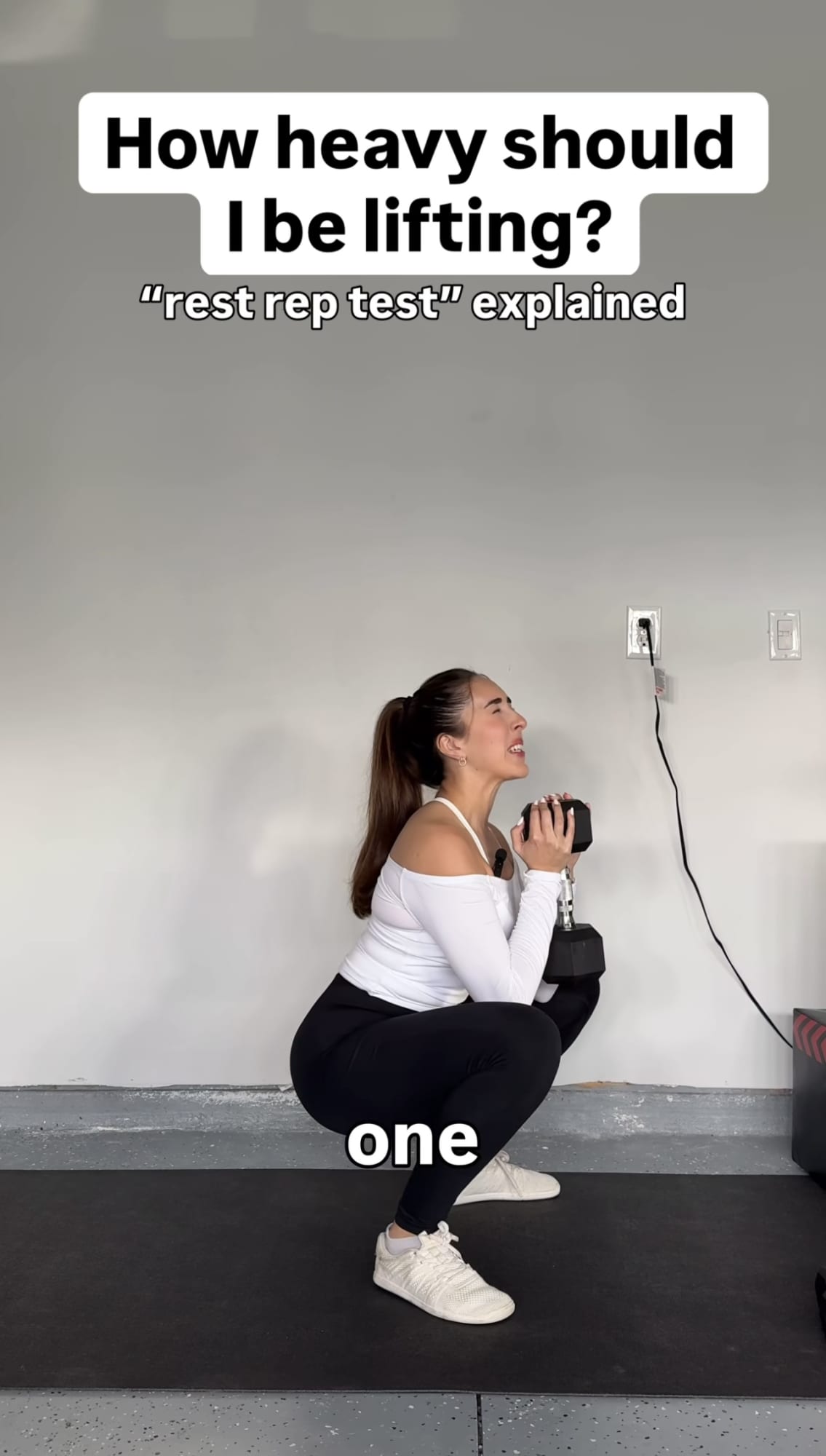
https://www.instagram.com/reel/DSDC7O2ACHP/?igsh=MXQ0dGp4azJ3bzVmZg==
To sum it up:
Fatigue usually refers to using lighter weights with very high repetitions. It often involves doing so many reps that you feel shaky, burning, and tired—but it doesn’t necessarily mean you’ve reached failure.
Failure, on the other hand, refers to the point where you cannot complete another repetition with good form.
The quick “Rest, Rep Test” mentioned in the video is a great way to see where you stand.
After you finish your set, put the weight down for about five seconds. Then immediately pick it back up.
Ask yourself:
Can you do more reps right away?
Or do you need 1–2 minutes before you could perform another set?
If you can immediately perform more reps, that set probably wasn’t close to failure—it was more likely just fatigue.
And by the way, feeling tired can still be tough, but it doesn’t necessarily mean you were challenging the muscles enough to drive strength gains.
This framing can sometimes shift how we approach training.
If we are in a Small Group Semi-Private Training Session at Park Fitness, we will designate a rep target (6, 8, 12, etc.).
So if the rep target is 8 reps, and you complete 8 reps and put the weight down, ask yourself:
If you picked that weight back up after just a five-second rest, could you easily perform more reps?
If so, it’s probably too light.
Now let’s look at Team Training.
If we are in a 30-second interval, for example, doing kettlebell rows, you might complete 8–10 reps in that time if you are moving at roughly three seconds per rep.
For the sake of the example, if the interval ended and you could immediately pick that same weight back up and perform a bunch more reps with good form, then it was likely too light.
Side note: This concept applies primarily to the strength movements in Team Training.
If you finish 30 seconds of step runs and feel like you could jump right back in and keep running, that’s a different situation entirely. We can talk more about those types of efforts another time (think Ski-bruary and a different style of intensity).
Often this fatigue vs. failure concept is brought up in discussions around workouts like barre or Pilates. In those classes you might notice a lot of reps, lots of burning, shaking, and fatigue.
However, those types of workouts typically are not as impactful for building strength, muscle, and longevitycompared to what we focus on daily at PF.
They can still have their place—but then the question becomes:
How much time do you have each week to devote to exercise?
Most PFers are busy. They want to get in, get out, and get back to their lives.
They usually don’t have unlimited time to spend on workouts that may have less impact on their goals than strength-focused training that:
Builds muscle
Promotes lean tissue
Improves cardiovascular health
Burns calories
There is a heirarchy to this fitness thing. Remember, the best workout is the one you'll do. BUT, if you are open to doing most things in fitness, some will have a greater impact than others.
That's why we do what we do and why we design our workouts the way we do. Hit us up if you have questions!